
How Hair Problems Can Reflect Your Overall Health
- by James Leger
- 15 hours ago
- 0 comments

Picture this: you wipe the shower wall and find a hair clump the size of a hamster. Your first thought is probably “great, another bad hair day.” Hold on. Your hair is more than a style choice. It grows from tiny factories that react fast to what happens inside your body. When hormones wobble, nutrients run low, or stress piles up, those factories slow down, and your strands show it. Even habits like trichotillomania, the urge to pull out your own hair, can signal that something deeper needs attention. Let’s decode what your hair might be trying to say.
Thinning Hair Points to Hormonal Shifts
 Your scalp is a gossip. It tattles on your hormones long before any other part of you says a word. Thyroid trouble is a classic culprit, since an underactive or overactive gland can leave strands brittle, dull, and awfully sparse. Polycystic ovary syndrome often shows up as thinning at the crown, sometimes paired with stubborn chin whiskers, acne, and irregular periods. My friend Dana shrugged off her shedding for a full year, until a blood test revealed her thyroid was napping on the job, and a simple pill fixed the plot. If your hairbrush starts to resemble a small woodland creature, book a checkup with your doctor and stop playing detective at the bathroom mirror.
Brittle Strands Reveal Nutritional Gaps
Your mane is picky about its diet, much like a toddler at dinner. Protein, iron, zinc, and biotin all feed the follicle, so any shortage shows up on your head within a few months. Crash diets are the worst offenders, because the body decides hair is a luxury and slashes the budget first. Low iron, especially in women, can trigger shedding that feels like a bad breakup, messy and lingering. Dry, straw-like texture may also hint at low intake of healthy fats, like those found in salmon, walnuts, and avocados. Skip the miracle shampoo, and try eggs, lentils, and leafy greens before spending a small fortune on bottles that promise everything.
Sudden Shedding Mirrors Stress
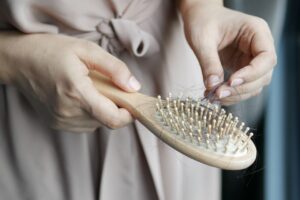 Stress loves a dramatic exit, and your hair is its favorite stage. Weeks after a rough event, strands can drop out in handfuls, a condition doctors call telogen effluvium. Surgery, a breakup, a pandemic, or a brutal work deadline can all flip that switch without warning. Then there is alopecia areata, where the immune system mistakenly attacks follicles and leaves smooth, round bald patches that seem to appear overnight. Pulling or twisting your hair during anxious moments, known as trichotillomania, deserves kindness, not shame. Sleep, gentle movement, and honest chats with a friend or therapist often coax the regrowth along, even if it feels slow as molasses. So don’t trap yourself in your room. Go out and be with your friends.
Scalp Trouble Signals Skin and Immune Issues
An itchy, flaky scalp is rarely just a cosmetic nuisance. Seborrheic dermatitis, which brings greasy yellow flakes, often flares with stress, cold weather, and hormonal swings. Psoriasis can build silvery plaques that tug at the strands and cause temporary loss. Sudden changes in texture or color, such as early graying, sometimes link to vitamin B12 deficiency or autoimmune activity. Ringworm of the scalp, a fungal infection, creates scaly circles and needs prescription treatment, not another trendy oil from your cousin’s cousin. Your dermatologist has seen it all, so don’t be shy about showing off your scalp, flakes and all.
Your hair is a status report you wear on your head. A sudden change deserves attention, not panic. Think of it as a check-engine light, glowing politely until someone looks under the hood. Track what shifts, such as shedding, texture, or scalp comfort, and jot down the dates. Bring those notes to a doctor, along with questions about thyroid, iron, and stress. Most hair troubles respond well once the root cause is found, and a few gentle habits make a real difference. So the next time a strand lands on your sweater, listen instead of sighing. Your body is talking, and it has excellent timing. Locks rarely lie, but they do whisper. Early action usually means simpler fixes. Your future self, with a thick, glossy ponytail, will thank you.